Gustave Caillebotte: Parisian Impressionist with a Passion for Water
Category: Books,Arts & Photography,History & Criticism
Gustave Caillebotte: Parisian Impressionist with a Passion for Water Details
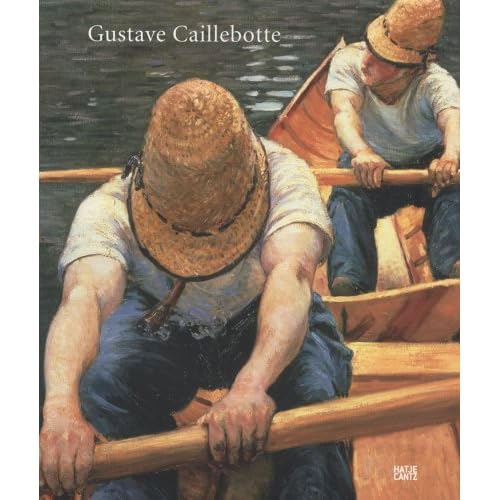
Rowers and divers, strolling couples, scenes of Parisian working life: This is the world of Gustave Caillebotte (1848-1894). Though he was affiliated with Impressionism from the start (he funded several early Impressionist exhibitions and often supported colleagues like Renoir, Monet and Pissarro by buying their works), and though he shared its commitment to "optic truth," Caillebotte was a Realist in the tradition of Courbet, and his painting is characterized more by its relation to early photography than by its optical subjectivity or its brushwork. Vertiginously tilting or zooming-in perspectives, whether along Parisian boulevards and the Seine or indoors, across intimate interiors, are Caillebotte's forte: His famous "Paris Street, Rainy Day" of 1877 (now in the collection of The Art Institute of Chicago), in which the street's wet paving stones loom up to the viewer, visually rivaling the buildings above them, is one example of such photography-derived effects. This publication is an invitation to discover Caillebotte, whose name has lately become more prominent, in part because of his pioneering blend of photography and painting. It particularly addresses Caillebotte's fondness for riverside and coastal scenes: He loved rowing and sailing, and his water landscapes, which feature colorful, glowing depictions of rowers on the Yerres, the Normandy coast, the banks of the Seine and the sailboats on the Argenteuil, are among his best-known works. Approximately 50 paintings, drawings, contemporary photographs and construction sketches and models for yachts create a comprehensive view of Caillebotte's achievement.


Reviews
This book is the catalogue for an exhibition held at the Kunsthalle Bremen, Germany, the Ordrupgaard in Copenhagen, Denmark and the Brooklyn Museum in NYC, in 2008-2009. The text is divided into several interesting essays that shed new light on Caillebotte's importance in the Impressionist movement, first as a financial backer (he came from a wealthy bourgeois family and became one of the most important collectors of his fellow-painters' works) and then as a member in its own right. The book also shows his affinity with the famed French storyteller Guy de Maupassant (especially in their depictions of rowing scenes, a favourite theme of the Impressionists) and compares Caillebotte's art to Monet's. Following the illustrations of the works that form the exhibition , several studies on the role of the figure, the image of Paris, of Yerres, of Normandy and of the Seine landscapes give a better idea of the depth of an artist long neglected and now finally given a deserved recognition.One criticism however: the quality of the illustrations leaves a lot to be desired, the colors often appearing somewhat dull and faded (quite a disappointment when one knows the originals).Yet, the book still deserves four stars because of the text, which makes it the best recent publication on this artist in my opinion.